Curiosities you might not know about Casa Vicens in Barcelona
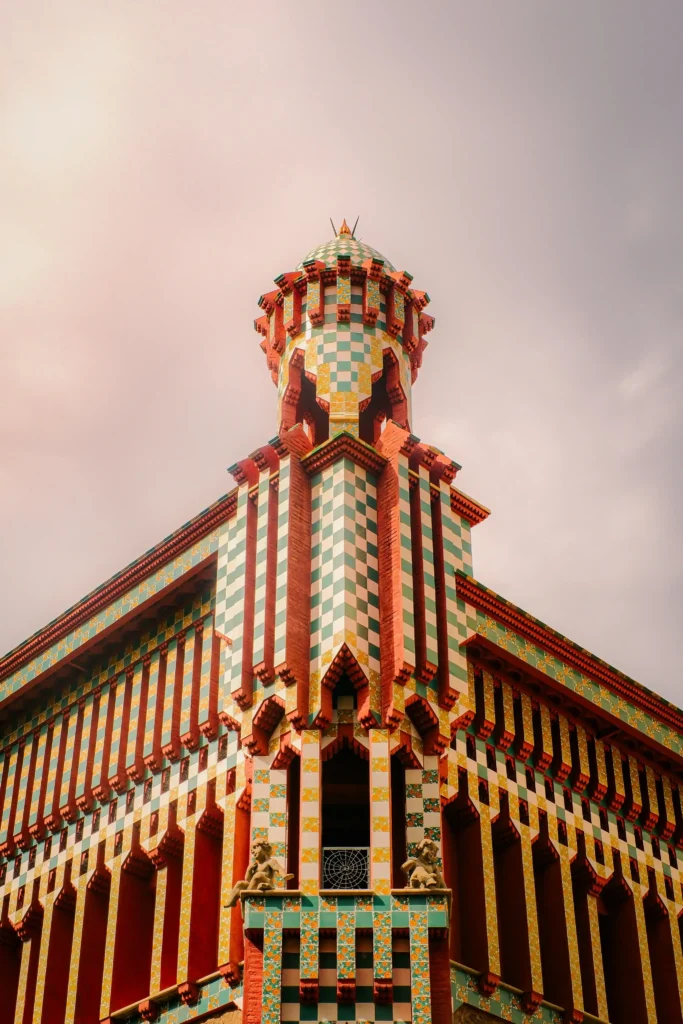
Located in the Gracia neighborhood, Casa Vicens in Barcelona is much more than a beautiful Modernist building: it is the starting point of Antoni Gaudí’s creative universe. Built between 1883 and 1885, this iconic house surprises visitors not only with its explosion of color, shapes, and materials, but also with the wealth of details, symbols, and unconventional decisions hidden within its walls.
Often overshadowed by Gaudí’s more famous works, Casa Vicens holds fascinating curiosities that reveal how the architect began experimenting with nature, craftsmanship, and oriental influences. From the richly decorated Casa Vicens interior to the innovative architectural solutions, this Vicens House Barcelona stands as a unique gem. In this article, we invite you to discover lesser known facts that make a Casa Vicens tour an essential experience for understanding the origins of Gaudí’s genius and the significance of Casa Vicens.
1. Casa Vicens is Gaudí’s first major work in Barcelona
Casa Vicens was Antoni Gaudí’s first major work, built between 1883 and 1885. In this early project, Gaudí began experimenting with color, ceramic decoration, inspiration drawn from nature, and Oriental influences elements that would later define his unmistakable style. Although still far from the organic forms of his most famous works, Casa Vicens already foreshadows the creative genius that would go on to revolutionize Modernist architecture.
2. It was not born as an urban house, but as a summer residence in Barcelona
When it was built between 1883 and 1885, Casa Vicens in Barcelona was conceived as a summer residence for the Vicens family, in a still rural Gràcia, separated from the city. This seasonal character shaped its design: Gaudí integrated the Casa Vicens interior with nature through large windows, open spaces, cross ventilation, and a colorful vegetal decoration that evoked outdoor living
3. In Casa Vicens, the tiles are inspired by real flowers
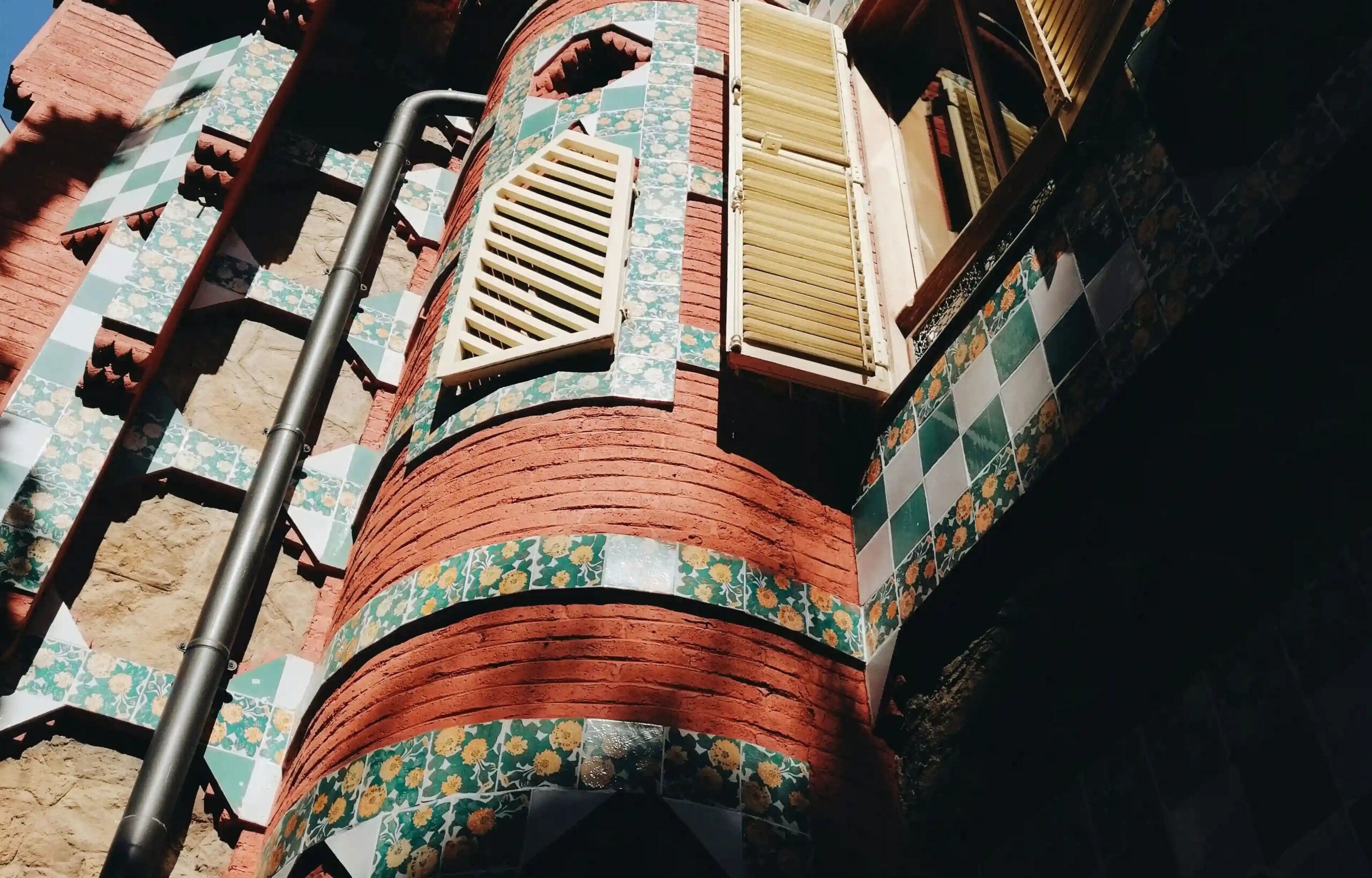
One of the most distinctive features of Casa Vicens in Barcelona is the use of ceramic tiles with floral motifs inspired by real flowers from the garden, such as carnations and marigolds. In this early work, Casa Vicens by Gaudí transforms natural elements into façade ceramics, integrating nature into architecture and anticipating his idea of uniting art, nature, and construction, an approach that can still be appreciated today during a Casa Vicens tour.
4. The railings imitate palm leaves
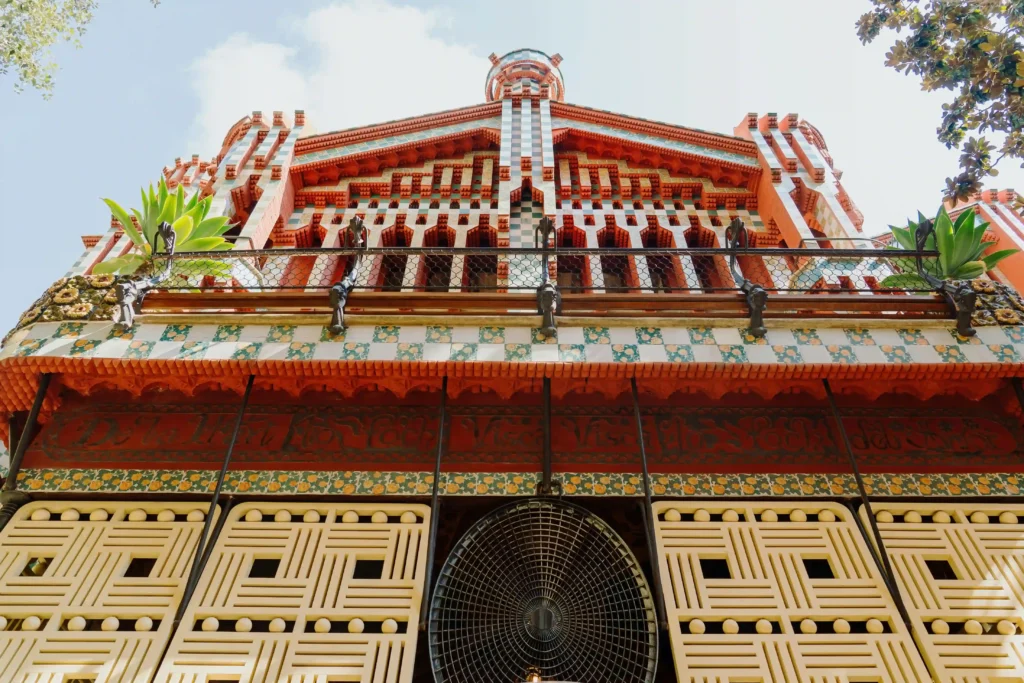
The wrought iron railings of Casa Vicens reflect Gaudí’s early interest in natural forms. Inspired by palm leaves, they combine function and decoration, connect the house with the garden, and anticipate the expressive use of iron that would later become a hallmark of Casa Vicens by Gaudí and his architectural language in Casa Vicens in Barcelona.
5. For decades, Casa Vicens could not be visited
For decades, Casa Vicens in Barcelona was a private residence and could not be visited. After a major restoration process in the 21st century, it finally opened to the public in 2017 as a museum, allowing visitors to discover one of the earliest works of Casa Vicens by Gaudí, now accessible through a Casa Vicens tour.
6. Casa Vicens has been declared a World Heritage Site
Casa Vicens in Barcelona has been a UNESCO World Heritage Site since 2005, as part of the group of works by Antoni Gaudí. This recognition highlights the importance of Casa Vicens by Gaudí in the origins of Modernisme and has supported its conservation and international visibility, making it a key stop on any Casa Vicens tour.
7. An extension that is not by Gaudí
Although it is closely associated with Gaudí, not all of the current building of Casa Vicens in Barcelona is his work. In 1925, the house was extended by Joan Baptista Serra de Martínez, who respected the original style. This later intervention reflects the historical evolution and changing uses of Casa Vicens by Gaudí
8. The Casa Vicens adapts to the climate
Casa Vicens in Barcelona was designed to adapt to the Mediterranean climate. Casa Vicens by Gaudí carefully considered orientation, natural light, and cross ventilation to ensure freshness and comfort, demonstrating a functional architecture in harmony with its surroundings.
Other works by Antoni Gaudí
Innovative for its structure, interior courtyards, and sculptural rooftop